
Menu
- Home
- Ask an Expert
- Women’s health
- Your EFAP
- Wellness resources
- Wellness in the workplace
close
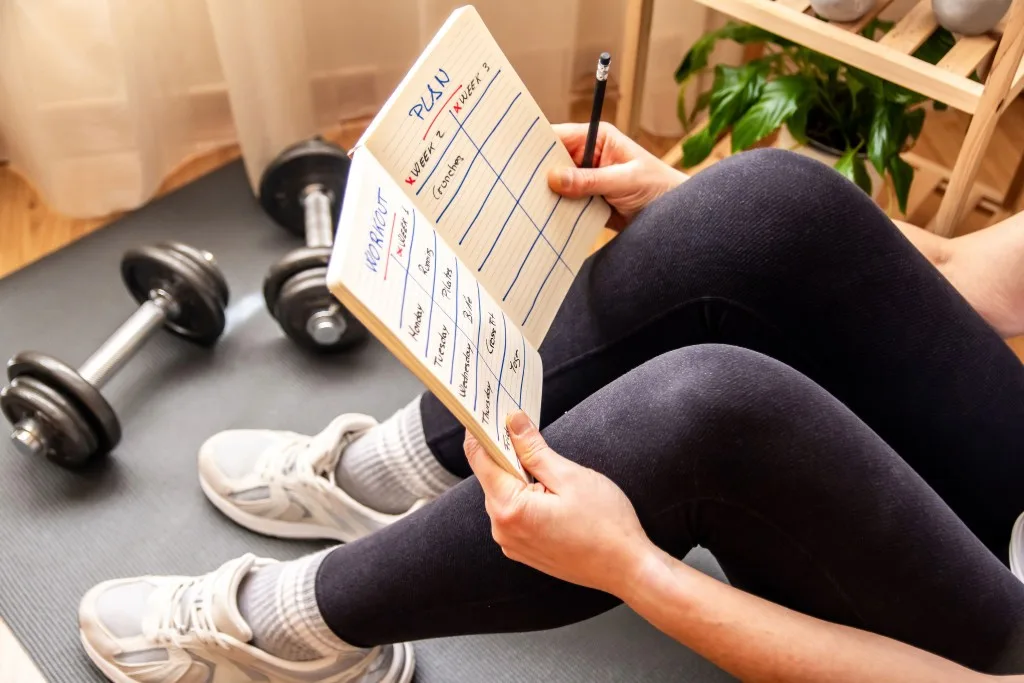
In the first article of this series, menopause health and fitness specialist Jill Rehman explored how exercise can help manage common menopause symptoms such as fatigue, sleep challenges, anxiety, brain fog, and hot flashes.
Understanding why exercise matters is an important first step. The next question is often: What type of exercise should I be doing?
In this article, Jill breaks down the types of movement that can have the greatest impact during perimenopause and menopause, including strength training, cardio, mobility work, and walking. She also shares practical strategies to help you get started and build a routine that works for your lifestyle.
If there is one thing I want you to understand about exercise during perimenopause and menopause, it is this:
You do not need the perfect program. You need a sustainable one.
The goal is not punishment. The goal is feeling stronger, moving better, managing symptoms, and protecting your long-term health.
To learn more about how exercise can help manage symptoms read: Using exercise to help common menopause symptoms and feel better
Strength training is a cornerstone of menopause health and longevity.
In the few years before and after menopause, it is possible to lose up to 10 per cent of your bone density. After the age of 50, nearly one in two women and others going through perimenopause and menopause will experience an osteoporotic fracture.
That is a staggering statistic, and much of the risk is preventable.
Strength training and plyometrics (jump training) stimulate bone growth by creating tension through muscle contraction.
Muscle naturally declines with age, approximately 0.3–0.8 per cent per year starting in your 30’s. In the most serious cases, without actively countering this loss, you could lose up to 40 per cent of your muscle mass by age 70.
But here is the empowering truth: you can build muscle at any age through progressive overload.
Progressive overload means gradually increasing the challenge of your workouts over time, so your muscles continue to adapt and get stronger. It feels amazing.
More muscle means:
What you can start doing today:
A quick reminder: Your exercise plan should work for your body. If injuries, joint pain, mobility limitations, or health concerns are affecting what you can do, there are often modifications and alternatives that can help. A qualified fitness professional or physiotherapist can help you find an approach that feels safe, effective, and sustainable.
Keep in mind that yoga, Pilates, and weighted vests are not effective tools for building bone density or muscle mass. They are valuable for many other reasons, but strength training requires progressively increasing resistance.
Cardiovascular risk rises during menopause, making cardio a powerful protective tool.
Improving cardiovascular fitness can reduce all‑cause mortality by up to 30 per cent, when combined with strength training it decreases by another 15–20 per cent.
Zone two is your “brisk walk with a friend” pace. The kind of movement where you can still chat, breathe comfortably, and actually enjoy yourself.
This type of training:
HIIT is all about short bursts of effort followed by rest.
It is incredibly effective for improving insulin sensitivity and reducing visceral fat, two things that get trickier during perimenopause and menopause.
It is efficient—think snack size exercise—and can boost your conditioning without needing long workouts.
Mobility work like yoga, stretching, and Pilates, support joint health, flexibility, and recovery.
Because the musculoskeletal impacts of menopause can affect the joints, it is important to consult with your doctor or physiotherapist as needed.
And remember: Motion is lotion. Please keep moving.
Mobility focused exercise can also help manage:
Walking is simple, accessible, and incredibly effective.
It supports:
Start where you are and build from there. If you are looking for a goal, around 7,500 steps per day can be a helpful benchmark, but consistency matters more than hitting a specific number right away. Focus on gradually increasing your daily movement over time.
Walking does not improve bone density, but it can improve lifespan. It is also one of the easiest ways to feel better every day.
Starting exercise during perimenopause and menopause can feel daunting, especially when energy and motivation fluctuate.
The key is to make it easy, social, and scheduled.
Here are practical ways to begin:
Consistency beats intensity. Start small, build gradually, and let momentum carry you. Small steps lead to big change.
Building an exercise routine is often easier when you have access to the right support and resources. Depending on your benefit plan, ASEBP offers programs and services that can help you get started and stay on track such as:
If you are not sure what supports are available to you, log in to My ASEBP or contact a benefit specialist for assistance.
The information provided in this article is for personal use, reference, and education only. ASEBP does not provide medical advice. Before starting any medication, product, or treatment, you should always consult with your pharmacist, health care provider, or call Alberta Health Link at 811.
Every year Jill works with hundreds of clients to help them feel better, get stronger, and become fitter while navigating menopause.
For more information, email benefits@asebp.ca or call 1-877-431-4786
You can also schedule a phone or video meeting with a benefit specialist at asebp.ca/contact-us